Hair brushing
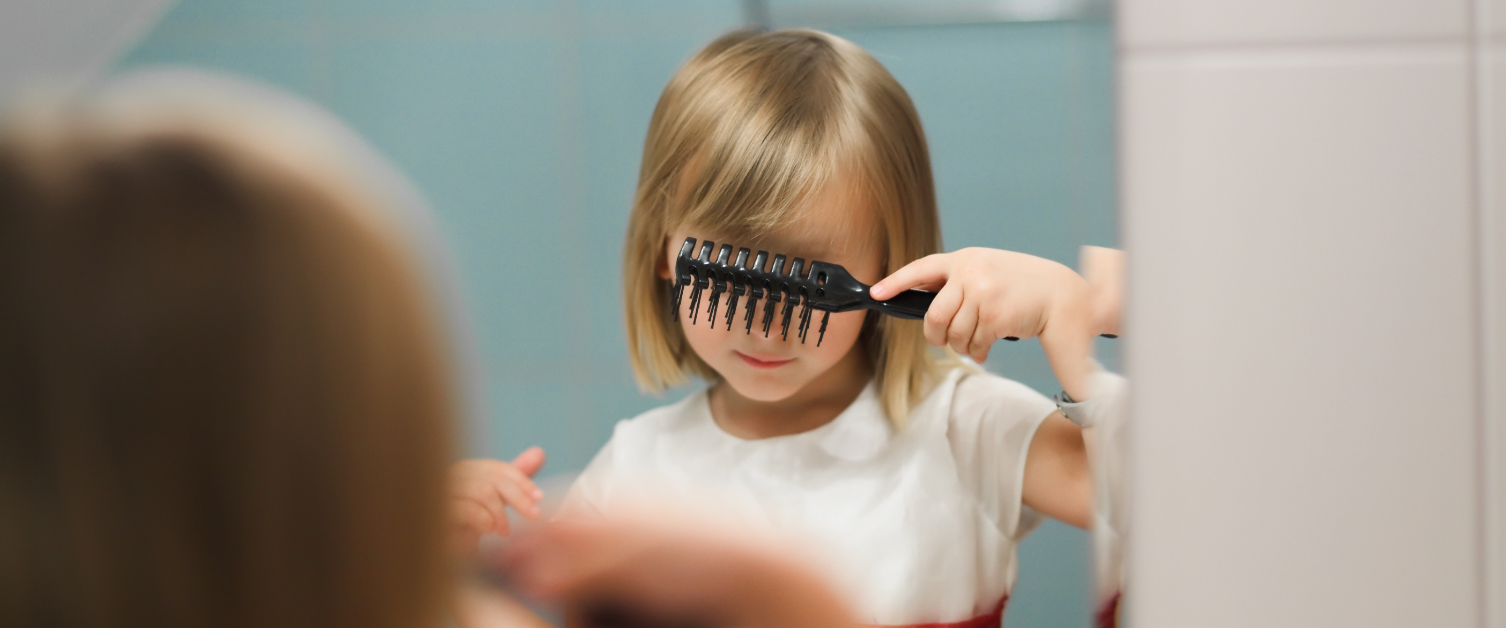
This advice sheet is designed to help you support your child with hair brushing.
Why Hair Brushing can be difficult:
Some children find hair brushing uncomfortable or upsetting. This may be because of:
- The feel of the brush
- Pulling on the scalp
- Past experiences of pain or tangled hair
- The environment (noise, lights, smells)
These sensations can feel much stronger for some children. Going slowly, offering choices, and staying calm can really help.
Top Tips for Hair Brushing
Before Brushing:
Think about the environment
Your child may be sensitive to:
- Noise (TV, music, people talking)
- Bright lights
- The feel of brushes or hair products
- Strong smells
Try to keep the space calm and comfortable.
Use firm pressure or massage
- Gentle, firm pressure to the shoulders, head, or scalp can help
- This can make brushing feel easier
- Only do this if your child is happy with it
- It can be done at other times too, not just before brushing
Choose the right brush
- Fine or straight hair: use a soft‑bristle brush
- Thick, wavy, or curly hair: use a detangling brush or wide‑tooth comb
- Let your child help choose their brush if possible
Brush regularly
- Brushing every day helps stop tangles
- This makes brushing quicker and less uncomfortable
During Brushing
Start with damp hair
- Spray hair lightly with water or leave‑in conditioner
- Damp hair is easier to brush and pulls less
Brush in small sections
- Work on one small part at a time
- This reduces pulling and helps your child feel more in control
Brush from the ends upwards
- Start at the bottom of the hair and slowly move up
- Hold the hair near the roots to reduce pulling
- Let your child try brushing themselves if they can
Use detangler if needed
- These products help loosen knots and reduce pulling
Make it fun
- Play favourite music or a short video
- Practise brushing on dolls or adults
- Use praise or small rewards
- Try to make it part of a routine your child enjoys
Try different positions
- Sitting with feet on the floor can feel more secure
- Standing may suit children who need to move
Using a mirror can also help.