Sitting for play
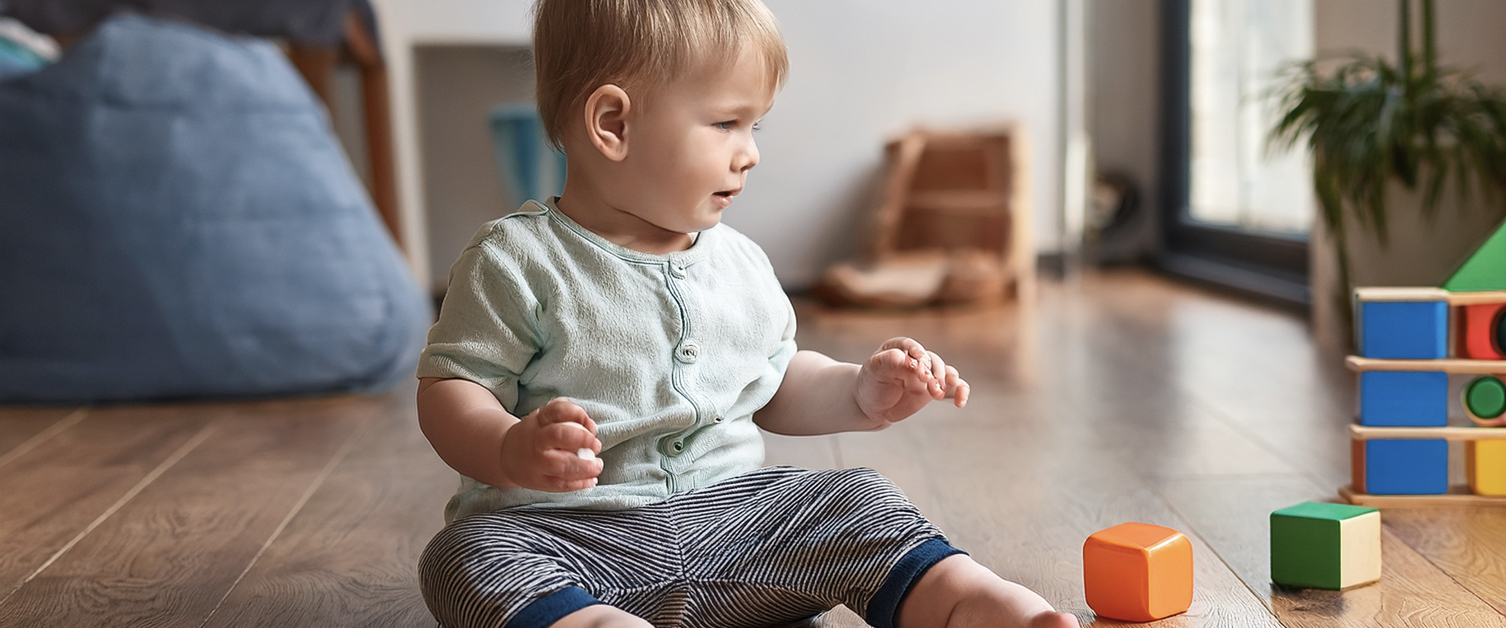
Infant sitting
This position will help your child with learning to hold their head up, and give them more chances to explore their surroundings by looking around and using their hands to move and lift objects..
-
Make sure your baby’s head is in line with their body, because turning it too much can make it harder for them to breathe.
-
Sitting on your lap: Sit your child on your lap facing outward. Use your body to support them and place your hands around their chest to help them stay upright.
-
Infant seats: Let your baby sit and look around using a highchair or their buggy. You can use a rolled‑up towel to help keep their body straight and bring their hands to the middle. Once they can hold their head up well, you can also use a Bumbo seat or something similar.
Sitting and reaching
Sitting and reaching away from the body helps to improve your child's sitting balance.
-
Sit your child on the floor. If they still need help to stay upright, sit behind them and support their upper body. Place or hold toys to the side so they can reach for them.
-
As their sitting gets better, encourage them to turn their body to reach for toys behind them, above them, or in front of them. It’s also helpful to practice reaching across their body with the hand that’s furthest from the toy.
Side sitting
Side sitting helps your child learn to turn and control their body . This is needed for crawling and walking.
• Gently turn one of your child’s legs so both knees point to the same side.
• With their hand on that side supporting them, help them reach forward and across their body.
• When they’re ready, move on to having both hands on the floor on the same side.
Sitting at the table
Best seated position at a table or desk
-
Feet should be flat on a surface, with hips and knees bent at about 90 degrees.
-
Their back should rest against the back of the chair for support.
-
Their arms should rest comfortably on the table, ideally with the table about 2 inches above their bent elbows.
Ways to help your child sit well at the table
If your child’s feet don’t reach the floor, you can give them something to rest their feet on, such as:
-
A commercial footrest
-
A children’s toilet step
-
Yoga blocks
These help keep them stable and comfortable.
Play in specialist seating
If your child has been given a specialist chair by their Occupational Therapist (OT), it’s helpful to use it for sitting and reaching activities, like the ones described above. This supports their posture and helps their development.