Positions for your baby to play in
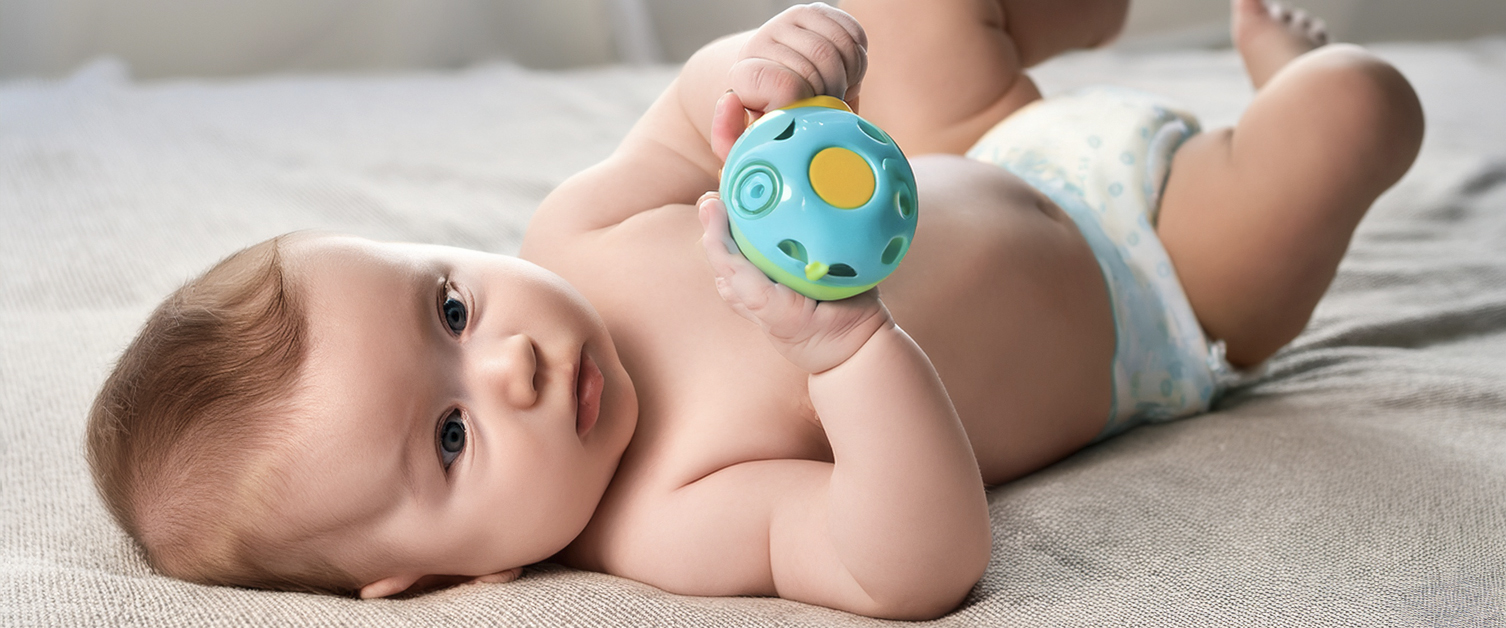
Tummy time play
 Tummy time (having your baby lie on their stomach) is important because it promotes head and upper body strength in infants.
-
Lay your baby on their stomach with their forearms under their chest, resting straight alongside their body. Ensure their legs are straight behind their body, and monitor that your child is pushing up with their arms and not arching their back.
-
It may help to position your child on their stomach over a small pillow or rolled up towel. Make sure they’re leaning on their forearms while lying over the towel or pillow.
-
Encourage them to look up at a toy or at you.
-
Singing to your baby can help distract them and encourage them to stay on their stomach for longer. If they are not happy in this position, try lying them on their stomach on your chest.
Lying on their back
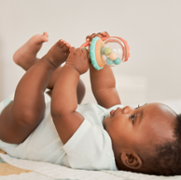 This position provides the child with the opportunity to look at what’s going on around them, and is another way to help them learn how to bring their hands or toys to the centre of their body and mouth for play.
-
Lying on the floor or a blanket: Place your child under a mobile, crouch over the
child and talk to them, shake toys or hold toys above their head. Encourage movement of their arms gently towards their chest or mouth.
-
On your knees: Sit with your knees bent and feet flat on floor. Place the child on your
thighs (on their back) so that they are facing you.
-
Cross legged support: Sit on a chair with your one leg bent in the number four
shape. Place your child on their back in your lap, so that their head is supported on
the knee of your bent leg.
Lying on both sides of their body
-
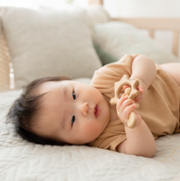 This position allows your child to engage with toys with both sides of their body. This helps both sides of their body develop evenly and supports them in staying on their side. Make sure you are practicing this on both sides, so that your child can use both their right and left arm.
-
Place a rolled towel behind your child’s back to prevent them rolling backwards.
-
Ensure your child’s head is in line with their body.
-
Encourage play in this position with toys or getting onto the floor and interacting with your child.