Veteran Stories
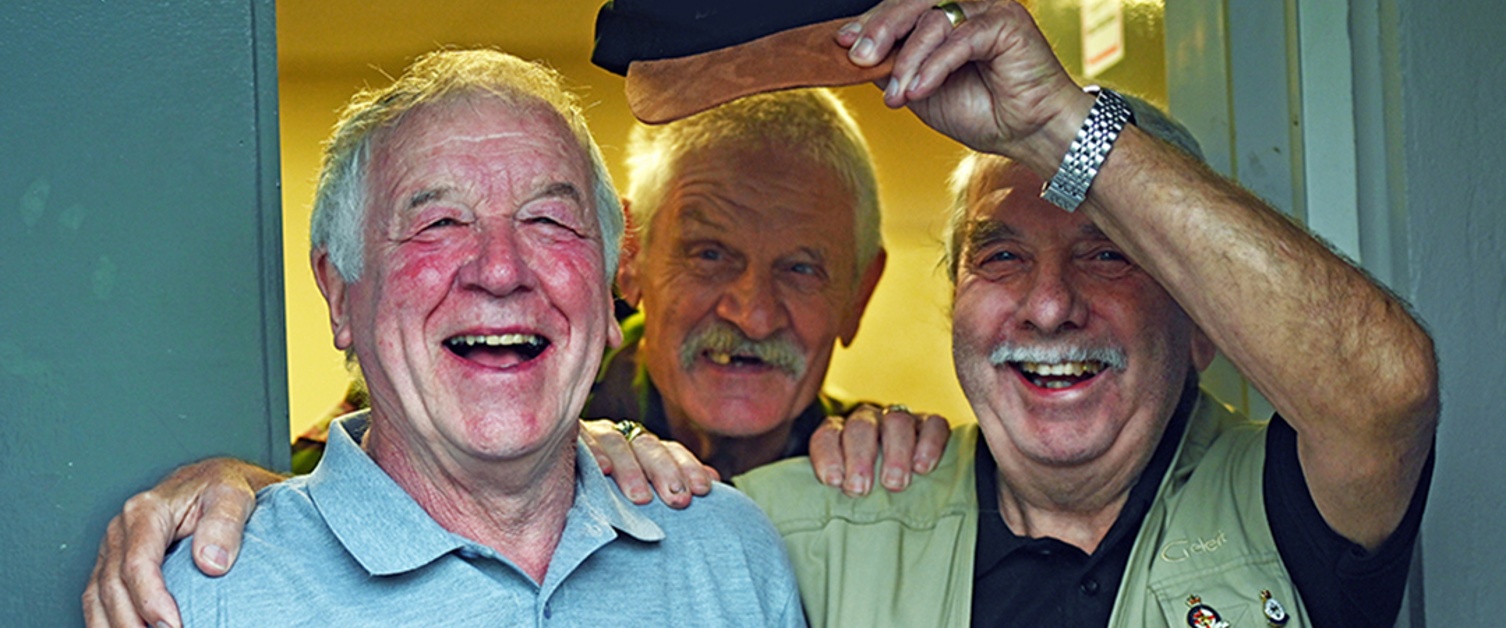
If you are interested in sharing your story about the difference support has made to you,
we would be honoured to hear from you - please write to us at: CTM.Concerns@wales.nhs.uk
Content Notice: The experiences shared here may be upsetting; if you are a member of the Armed Forces community or a family member and feel affected, please remember that support is available and you are not alone.
Life is Worth Living (Talk!) - Dean's Story
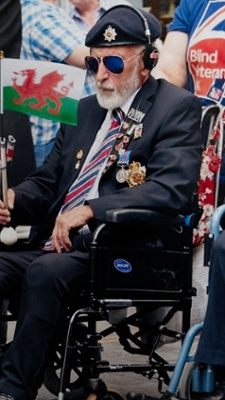 My name is Dean and I'm a member of Valley Veterans in Merthyr and I go to the hub in the Rhondda too. I’m also a member and volunteer with Blind Veterans UK too.
Before I got in touch with Blind Veterans, life wasn’t very good. I had problems with drink, depression. At the time I didn't realize I had Post Traumatic Stress Disorder. The wife and I separated and one daughter came to live with me and basically I got to a stage where I didn't want to be around no more and I decided to call it a day. My daughter phoned around to see if I could get any help. She got in touch with Help for Heroes but apparently I’m not a hero [according to them], so they didn’t want to know. I served in Northern Ireland, five years. And other parts, ten years. Social Services eventually got involved and I was put in touch with Blind Veterans. I struggled at first with them because I didn't admit that I couldn't see. Everything was just going downhill, and I couldn't cope with it all.
But they turned me around. A certain woman there turned me around. And since then, I've got on great. I run my own Veterans' Lunch Club but before then I was just sat in the house other than I’d go out once a month with the Blind Veterans. But then Woody came along, and he's been the godsend with this hub. He brought me over to the Merthyr hub. The boys have been fantastic with me. They brought me right out. And it's just a completely and utterly different life; a different person to what I was before. It's good to be alive thanks to these people. But if it wasn't for the Veterans, I wouldn't be here today, to be honest with you. Normal people just don't know how to deal with us. We all got a certain way of living, soldiers. But you come to a civilian, they haven't got a clue with us. They don't know. They don't know how we talk.
You listen to this in by here now. There’s F this and B this [swearing] in here but that's just the way we are. And it's great. It's brought me right back to living. I want to live now. I want to live, because I've got a reason to live now. And Blind Veterans, they've been out of this world with me. It's been marvelous for me, to be honest with you. One woman, Catherine, she brought me back from the brink, and we get on great. It's been a complete change of life. Whereas before nobody didn't want to know, nobody didn't give a damn about you. And it took one woman to change it all.
That would be the one change: going into blind veterans and meeting Catherine. We had a hard time to start off with, but she persevered, she got me there in the end, she got me out of a rut, because I just didn't want to bother them, life was no good to me, nobody else didn't give a damn. That was the biggest change in my life, going in and meeting them.
We're going through a bit of a bad time at the moment, but it's all right. I won't say it's fantastic. These boys help a lot. These hubs are a godsend, I tell you. Get as many people into them as possible because you can talk with these people. ‘A soldier? Shut up’ because he's not supposed to talk; he's a big hard man. But he's not, he's a person, and he’d like to talk. And [here] he knows he can talk to his own kind.
I get everybody in, as many people as I can. I deal with a lot of elderly people at the moment because they are left on their own once they get to a certain age. I'm a great friend with a 99-year-old man. He's 99 now in June and I met him through Blind Veterans. We've been close friends ever since. And he's a completely different person. He couldn't believe it at first. And he came and he said, ‘It's the best thing I've ever done coming to Blind Veterans’.
Me and my friend Graham, we have got a thing: if we see somebody sitting on their own, we'll call them over, get them to sit by us and try to get them to talk; just get chatting. And we’ve brought some of them over. We bring them in slowly because once you get them talking they come out of themselves and what they went through, and then you find out ‘Where did you serve? What did you do?’
Another big change is that I get out and about now whereas I was stuck in the house for 24 hours a day [before]. I get out, I'm meeting people. Like how I met Woody. My mate used to come over and he'd take me down to Wetherspoon's in Tredegar for a pint. And I was in there one day and Woody came over to me and he's telling me about this, that and the other and about this hub. And ever since then it's been fantastic. Everywhere he goes, I go with him. Like this weekend, I'd been sat in the house [all weekend] he took me out to Hereford. He phones me up ‘Do you want to come there?’ and there was a bloke doing a talk on his time in the SAS. It was great, he was fantastic.
It can be a big step [coming to a place like this]. It was a hell of a step for me. When I first went with Blind Veterans they said about going up to Llandudno. ‘I didn't know’, I said. I'm so used to being on my own, in my own company. Well, there was another gentleman from Cwmbran who had just started with Blind Veterans. They said ‘What I'll do is, I'll put you and Mike together to go up’. And that's what we did. We went up and we got on, we started talking. We met other people and they just fitted straight in. And we got there, and it just went from there. I've been on the telly too. On the news. God knows how many times!
The boys took me over for the NHS event. I was waiting to go in to have my gallbladder out and it had gone on and on and on for over a year and I was in and out of hospital all the time. I got talking to this nurse and she asked would I mind doing an interview for them. And I told them how the different things going on - like I'm telling you - and told them about my waiting for my operation and how I'd been mucked about for so long between two different health boards.
A chap came, I can't think of his name now, he works with PALS who are in hospitals and they deal with veterans, he said, right, I'll have a chat and the next thing I know, I was going in for my operation. That came about because of the event. It's no use sitting at home and just sulking and doing nothing about it. You've got to help yourself, and this is what they say on the telly, talking helps, and it does, it really, really helps.
We had a bloke, he's only a youngster and there’s this syndrome, I don't know if you've ever heard of it, the Charles Bonnet Syndrome. When you lose your eyesight, the part of the brain that deals with your eyes has got nothing to do, it's dormant, unemployed. So it makes things up and puts them in front of you so that you're seeing things. There's mosaics, people dressed in brightly coloured clothes or they can be in black and white. But you've also got the dark side, which is a really bad one.
I could see that he was talking to himself and he's pointing at the chair, but there was nobody there. Well, I knew exactly what that was because that's my subject, Charles Bonnet. One of his [support] staff was there, but just watching him. Well, that's no good. So Graham and I sat and talked to him, and we had him there for over an hour, talking to him. He said, ‘Can you see them? There's three people there,’ and I said, ‘Yeah, I can see them’. His helper eventually took him up to bed where he got all agitated and we didn’t see him the next morning.
A title for the story? Oh I don’t know ‘Life’s worth living’?
Anonymous Case Study
 When I came out of the forces, you’re sort of left on your own. From there it took me a long time to get settled, but once I was settled, then I started getting dreams and things, of falling down a tunnel and it was getting narrower and it never seemed to go away. Then after quite a few years, when I retired, I had massive panic attacks. They reckoned it was from working 100 miles an hour and then coming to a stop. One thing led to another then and I started having these funny dreams. Things that happened back when I was in the forces. So I went to the doctor’s and he said ‘I can't help you much, but I can put you on to somebody who can, but it’s a two year waiting list.’
In the meantime, for different reasons, I went to Macmillan. I saw a guy there. I saw him for quite a few weeks and it was working. Then all of a sudden he said, ‘I can't do any more for you’. I went back to the doctors about it and he said ‘let me phone somebody’. He phoned somebody and said, ‘there'll be somebody getting in touch with you from Dewi Sant’. So, true to form, within a fortnight I had an appointment, went down there and they introduced me to the veterans here.
So I came up here. I got to the door and I was very apprehensive and there was a few guys out there talking and they said, ‘oh, hiya butt’ and all. And I thought, ‘I feel at home already’. I walked in the door then and everybody was so welcoming. I felt at ease straight away. And it's the best thing that ever happened to me, to be honest with you, because I still get my… I suffer from PTSD. And I've had one thing after another with all different cancers and all this and everything's caught up with me.
But coming here and talking to the boys.. because the doctor I’m under at Dewi Sant said ‘You should talk. Talk to people’. And that's what I've done, and it's helped me. Just talking to the boys like. I'm just over a year here now and it's brilliant, it’s the best thing... It's great because you can talk to people, no matter if you're a civilian or anything. Military is brotherhood. You can talk and they’ll understand and they’ll turn and say, ‘oh, you silly sod!’ You know, banter.
Another thing that’s changed - the wife knows. Because she didn't know anything about this whatsoever. I kind of kept everything inside, bottled. And of course, my doctor, he just turned around and said to me, ‘do you want your wife to come in?’ And I was thinking about it, and I said, ‘yeah, go on then’. And I told her absolutely everything, like. And she couldn't believe it, you know, but she understands now. This is where I became comfortable talking to people.
Comradeship. It’s the banter and the noise that makes it welcoming here. It’s brilliant, what they’ve got here, you know, the different people that come here to help you and all this. It’s unbelievable.
Sometimes I was in a dark place before I came here. I was just talking to the boys now, because I just said to them, ‘do you ever feel you could go home, sit in a chair, close your eyes, and that's it’. And they’ve just looked at me stupid. But sometimes that's how I feel, you know. You have down days and you have good days. But I bottle everything and hold everything in. I'm letting it out slowly. I'm getting there, like, you know. But they’ve been in the same place.
I think it's the veterans themselves that keep it going. But the people who run it, people like Nigel, Sian and Paul, they're absolutely brilliant. Nothing’s too much of a problem. There's always something they can do for you. Nothing's too much trouble. And, yeah, they made things a lot easier for me coming here, to be honest. Nice people.
I just had my blood pressure taken now, and she's written it all down. I’ve got to make an appointment to see the doctor now. He phoned up already for me. So it's, you know, things like that, it’s brilliant, because he's sorting me out. I think I’ve still got a long way to go, you know, some of these dark thoughts I want to get rid of, but they'll go.
It's a laugh. You get a laugh. And the laugh and the banter and talking and, you know, it's like being back in (the forces). You've got the friendship, the brotherhood, like. It's not the same as having friends in Civvy Street. You have good friends in Civvy Street, yeah, but these people, they live with you. You know, you sleep, your toilets, the lot. You're all together, you know, and you have shared experiences that other people just can't understand. You help each other. (When I was in the army) the person next to you helped you. Helped you on with your kit, help you do your kit.
I'd do it all again, without a doubt. You're never alone. There's always somebody there. If I was going to tell someone about Valley Veterans, I’d say ‘do it! Come in!’
From Navy Veteran to Cwm Taf Morgannwg Volunteer
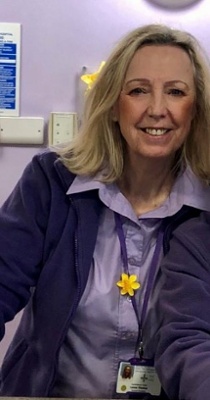
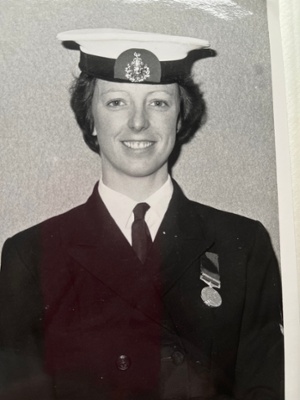 Lynne brings a lifetime of service, compassion, and dedication to supporting others to her volunteer role in Cwm Taf Morgannwg.
She began her journey of service in 1973, joining the Women’s Royal Naval Service at just 19 years old, following two and a half years working for the National Coal Board as a shorthand typist. After completing her initial training at HMS Dauntless and further training in Chatham, she was posted to HMS Victory (now HMS Nelson) in Portsmouth, where she worked as a Writer General at Admiralty House in the Dockyard. During this time, she had the honour of volunteering in the Service of Remembrance at the Royal Albert Hall - an experience she still holds with great pride.
Her naval career took her overseas to HMS St Angelo in Malta (1976-1977), where she supported senior officers at the historic Fort St Angelo. She later moved to HMS Lympstone in Exmouth and volunteered for a four-month deployment to Northern Ireland with 42 Commando, where she was awarded the General Service Medal.
After leaving the Navy in 1978, she continued to build a career rooted in supporting people. She worked as a Personnel Assistant for Sony UK before stepping back to raise her daughter. Her passion for caring for others led her to roles in residential childcare where she supported young children, an experience that deeply shaped her compassionate approach.
 She went on to work as a Relate Counsellor for five years across Wales and Germany, where her second husband was posted with the RAF. While in Germany, she also worked with Home-Start, recruiting and training volunteers to support families with young children. Returning to Wales, she continued this work for a further 12 years until the service unfortunately closed.
Three and a half years ago, she brought her wealth of experience to Princess of Wales Hospital as a volunteer She draws on her lifetime of skills - patience, empathy, listening, and encouragement -to ensure people feel heard, valued, and supported without judgement. She is deeply committed to helping make each person’s first contact with the hospital calmer, more reassuring, and more positive.
Outside of her work, she is a proud grandmother of nine and great-grandmother to two.
Her story is one of lifelong service - and she continues to make a difference every single day.