Diabetes and Rapid Access Podiatry
What we do
The hospital diabetes service can be found in the District General Hospitals.
Diabetes can cause foot problems because glucose can damage the nerves and blood vessels that supply the foot. These changes can be very gradual and you may not notice them. This is why your feet are screened every year at your GP practice. You will be given a risk classification, which is your level of risk of developing foot problems. If you have a risk classification of Moderate or High you will be referred to the Podiatry team for further assessment.
If you have an Ulcer on your feet that means you have Active foot disease and you will be referred urgently to the advanced podiatry wound care team. Other conditions which fall under ‘Active Foot disease’ are:
-
Suspected Charcot
-
Infection
-
Critical/Acute Limb Ischaemia
-
Other Reason (must be discussed with a DFC team member)
Who is it for?
The high risk service is for people who have health problems that put the foot at risk. Health problems like diabetes, poor circulation, neuropathy (sensation loss), rheumatoid arthritis or certain medicines and treatments for cancer, can increase the risk of foot problems occurring. Please note that having diabetes does not necessarily make you high risk.
Can anyone use the service?
You need your GP or any other recognised Health Care provider to refer you to the service.
Opening Times
Monday to Friday 9:00am – 4:30pm
What to expect
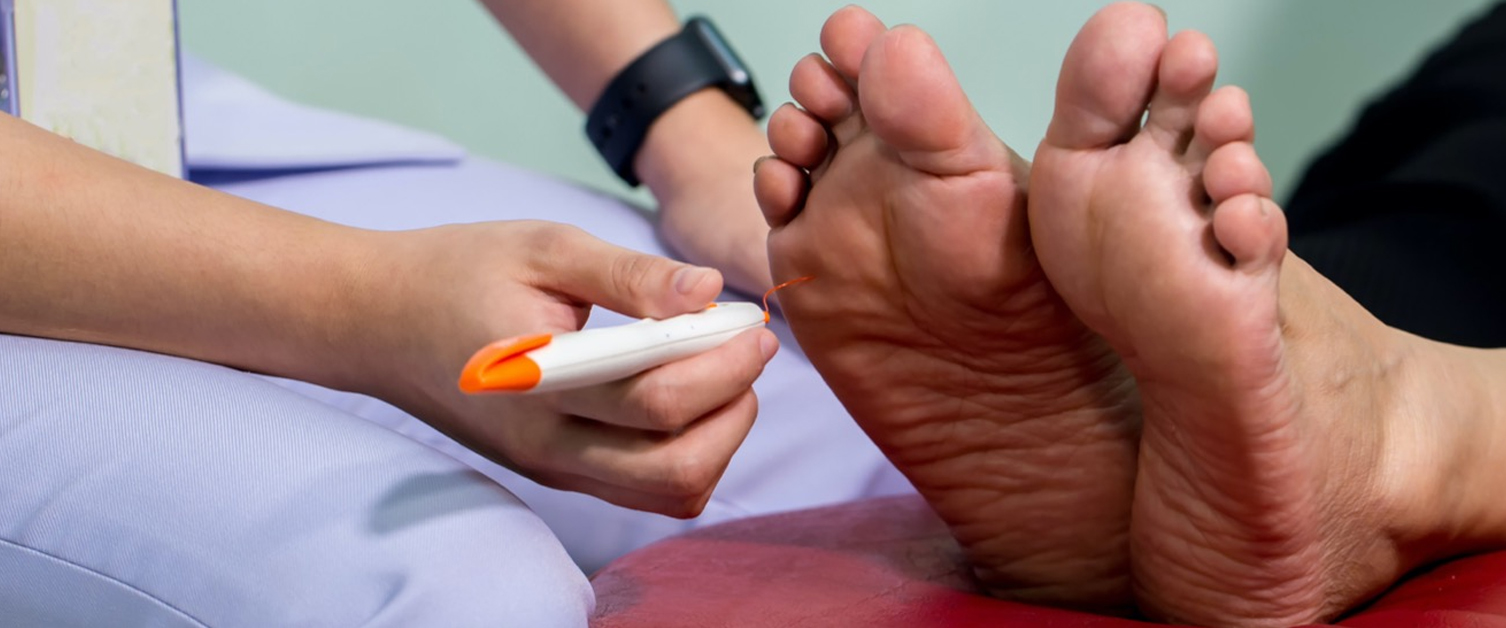
At your first appointment the podiatrist will assess your foot health and assess how at risk your feet are for ulceration, infection and amputation. If your feet are assessed as at high risk you will need to take extra care and may need regular treatment by a podiatrist. Our High risk clinics are run in a number of sites in the community.
Our advanced podiatry team will assess you and develop a treatment plan. This might include treatment of ulcers, treating any infection, possibly putting you in a cast to take the pressure off your foot.
They might refer you for an X-ray or to another specialist team, to make sure you get access to appropriate treatments when needed. This referral pathway helps prevent amputations and hospital admissions
Contact us
Y Bwythyn
The Common
Hospital Rd
Pontypridd
CF37 4AL
Useful Links
- What is a wound?
-
A wound is a break in the skin. This could be caused through too much pressure, shoes rubbing or from a trauma to the skin.
A wound which doesn’t heal is an ulcer. Anyone can develop a foot ulcer.
- I have Diabetes and a foot wound. What does this mean?
-
The development of foot ulcers in people with Diabetes is serious, especially if they become infected. Foot ulcers are linked to an increased chance of amputation. Diabetic foot ulcers require regular Podiatry treatment and the Podiatrist will agree a treatment plan with you.
- I don't have Diabetes. Is my foot ulcer still serious?
-
Yes, people who do not have Diabetes can still develop a foot ulcer. There are lots of reasons why a wound will not heal.
- What should I do if I think I have a foot ulcer?
-
If an area of your foot has a break in the skin that is not healing, feels hot, that throbs or is painful, has discharge (oozing) or smells, cover the area with a clean, dry dressing and contact Podiatry on 01443 443003 / 443005 to arrange a referral and/or appointment at wound clinic.
See our ACT NOW foot poster: Act Now Poster / Act Now Poster 2
ACT NOW
If you have any of the ACT NOW symptoms, please contact Podiatry on 01443 443003 / 443005 from Monday - Friday, 09.00am - 4.30pm.Your details will be taken and a Podiatrist will call you back.
- What is a wound clinic appointment?
-
We have wound clinics run by Podiatry across CTM hospital sites. Appointments usually last about 30 minutes.
- Who will treat me and what happens?
-
A Podiatrist with a special interest in wound care will assess and treat your foot wound. A treatment plan will be agreed with you, which will include footwear advice.
- Can I bring someone with me to the appointment?
-
Yes, you can bring someone along with you to the appointment.
- Can someone help with my dressings?
-
We can show you and your family how to change your dressing.
Here is a video which shows how to change a simple dressing: How to dress a foot wound
Download ‘Looking After Your Wound’ leaflet by the National Wound Care Strategy.
If you are housebound we can request the District Nurse to come to your house to redress your foot wound. Call 01443 443003 / 443005. Or if you are able to go out, we can organise your practice nurse to redress your foot wound.
- I have been given a Repose wedge. What am I meant to do with it?
-
The Repose Wedge is used to take the pressure off your heels. Please watch the following reference guide video for information about what to do with the Repose wedge: Repose Wedge Quick Reference Guide Video