"The signs were there. We just didn't know."
Around one in five children and young people diagnosed with Type 1 diabetes are already in diabetic ketoacidosis (DKA) when they arrive at hospital. DKA is a life-threatening emergency that occurs when Type 1 diabetes goes undiagnosed.
For many families, the warning signs were there for weeks, even months. They just didn’t know what they were looking at and each warning sign had a perfectly innocent explanation.
Type 1 diabetes develops when the body’s immune system attacks the cells that produce insulin. Unlike Type 2 diabetes, it is not linked to diet or lifestyle – it can affect anyone, at any age, and it comes on fast. The four classic symptoms are often easy to miss or usually have an explanation, they are: tiredness, weight loss, excessive thirst, and needing to urinate frequently. Diabetes UK refer to them as the “4 Ts”: Thirsty, Tired, Toilet and Thinner.
For one family, that crisis point came without warning – on a holiday abroad, in the middle of the night, thousands of miles from home.
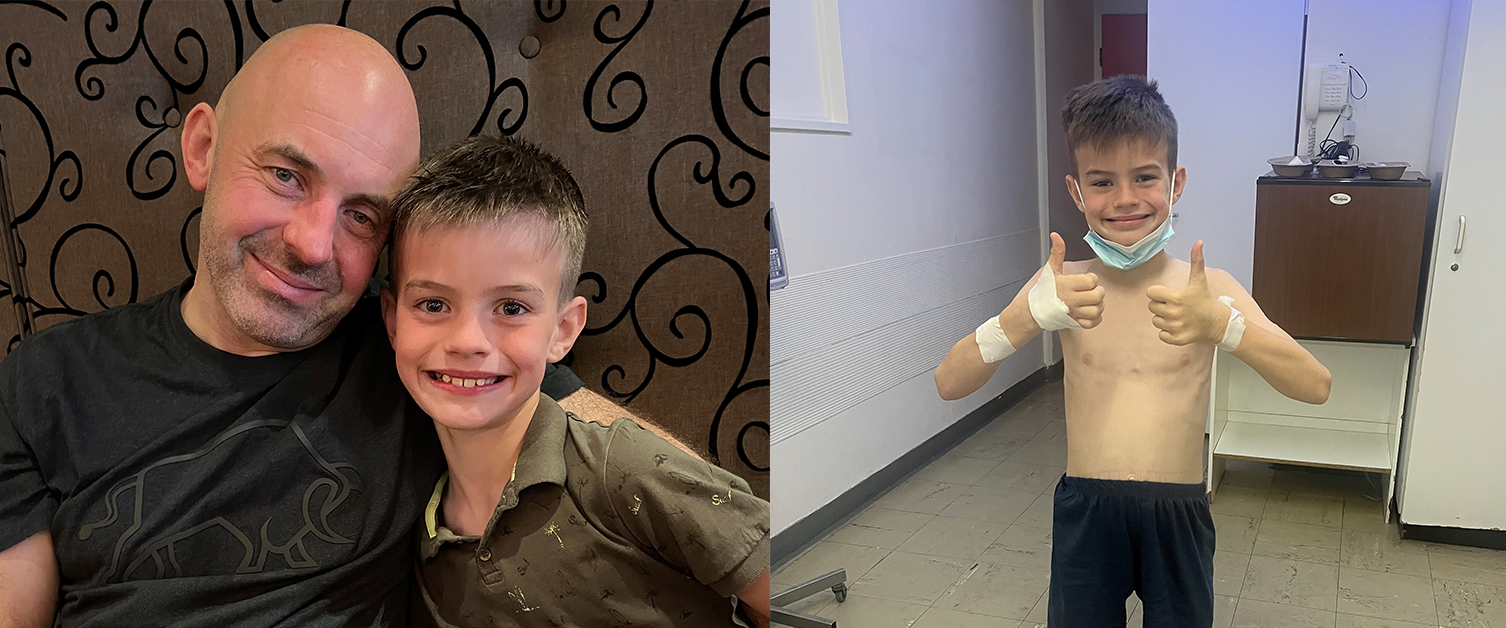
Luc’s story
“We should have seen the warnings. Luc was almost textbook as his ability to make insulin began to fade but we had no idea about diabetes and missed every sign.
We headed off on our family holidays to Koz. He became poorly as we stepped off the plane and was sick and off his food. Despite a visit to the pharmacy, we couldn’t get him feeling well.
A couple of evenings into the holiday he became very ill, very quickly. He couldn’t focus, struggled to breathe, and started seeing things. We knew we had to act but it was the middle of the night, in a hotel, in a strange place.
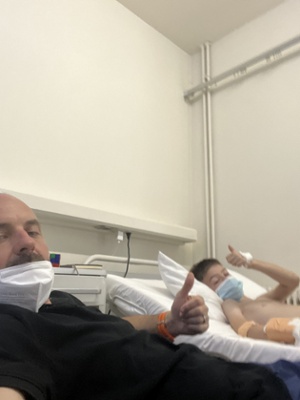 Luc and his father during his hospital stay in Athens.
He was carried to reception and a kind taxi driver rushed us to a hospital as I held him in my arms, watching him die.
The air force was called and he was flown on a military airplane to Crete because his blood glucose levels were off the scale. We were told they didn’t think he could survive the trip to Athens. He was in DKA and it was the first time our family had ever heard the term diabetic. We were separated as he was taken to an ICU unit on his own. It was a fight, but over the next 24 hours they managed to stabilise his blood glucose levels and then, two days later, I was allowed to see him. Nearly two weeks later, he was allowed out of hospital to fly home.
If only we had known the signs.
He was tired… but it was the end of a busy summer term and we thought he was just exhausted from all his end of term activities.
He was thin… but he was due a growth spurt and being with him every day meant we didn’t notice as the weight dropped off.
He was thirsty… but it was a hot summer and drinking a lot was not unusual.
He went to the toilet a lot. He even went three times during a cinema trip… but that was because he was drinking a lot.
We are now two years in and he is living his best Type 1 diabetes life, busy in Year 7 and enjoying playing football and learning karate. We were a slower taxi ride away from losing him and we completely missed the signs his body was giving. It was a terrible time, but could have been avoided. We are so fortunate and are forever grateful for those who saved his life and care for him now.”
Aimee Grimwood, Lead Paediatric Diabetes Nurse Specialist, shared: “When I read stories like Luc’s, my heart goes out to his whole family. They did what they could once they knew something was seriously wrong – but like so many parents, they simply had no reason to connect what they were seeing to diabetes. We want to keep sharing this message to help every parent, guardian, family member, friend and teacher/coach recognise the signs and symptoms of Type 1 diabetes.
“Type 1 diabetes can develop very quickly, and a child can go from seeming under the weather to being critically unwell in a matter of hours.
“If your child is unusually tired, losing weight, drinking more than normal, going to the toilet frequently or having fuller nappies, please don’t wait and see – speak to your GP or call NHS 111 Wales”.
“No family should have to go through what Luc and his family experienced, and early diagnosis really does make all the difference.”
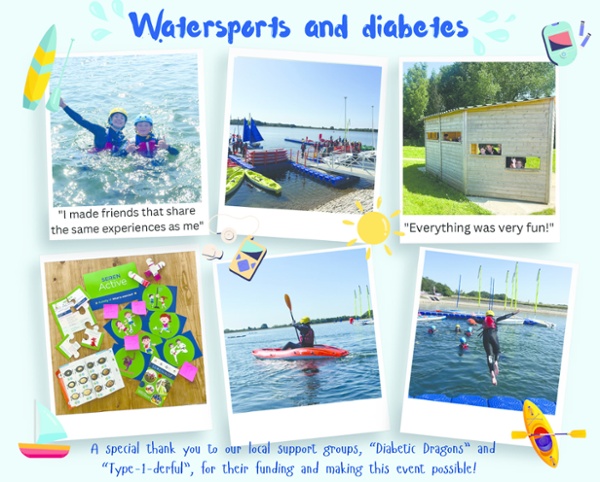 Images and feedback from the 2025 water sports event
Living well with Type 1 diabetes is possible and our Paediatrics Diabetes service is committed to showing children that a diagnosis doesn't have to hold them back.
Each year they organise fun, education events for different age groups, to support children and young people in managing their Type 1 diabetes, whilst also having the opportunity to make friends who truly understand what they're going through.
Last year, the water sports day brought young people with diabetes together to try kayaking, sailing and open water swimming while learning how to manage their condition during physical activity.
A special thank you to local support groups, Diabetic Dragons and Type-1-derful, whose generous funding have supported making the events possible.
If you’d like to find out more about events available to you, please get in touch: CTM.PaediatricDiabetes@wales.nhs.uk
For support and information about diabetes in children, visit our Paediatric Diabetes Service webpage.
30/03/26