Organ Donation Week 2025: CTM Staff
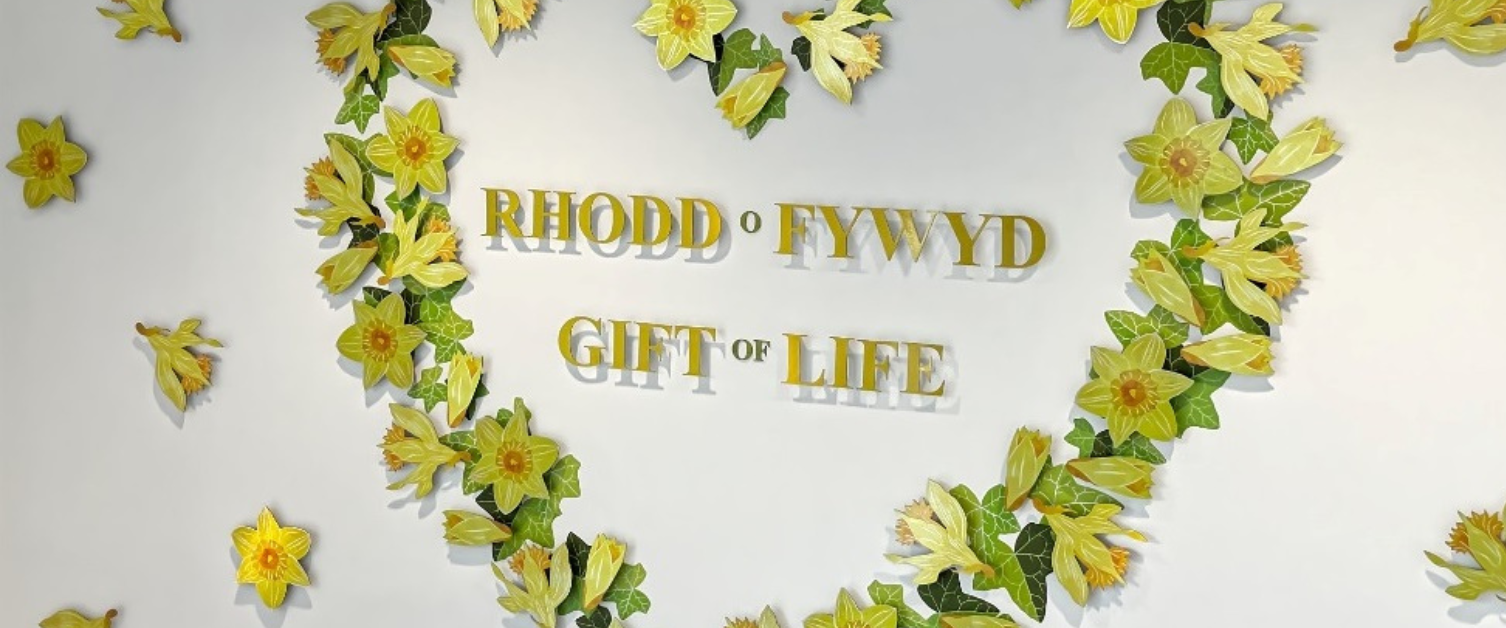
This week we are celebrating Organ Donation Week from the 22 - 28 September 2025.
Organ donation is supported by a wide range of staff and colleagues across the NHS, including teams from A&E, ICU, Theatres, Radiology, Physiotherapy, Pharmacy, Psychology, Haematology, Biochemistry, Blood Bank, Medical Examiners, Area Coroner and Catering.
We spoke to Corinna McNeil (Specialist Nurse for Organ Donation) and Shaun Miller-Jones (Specialist Nurse for Organ Donation) and asked them about their work with the Organ Donation Team.
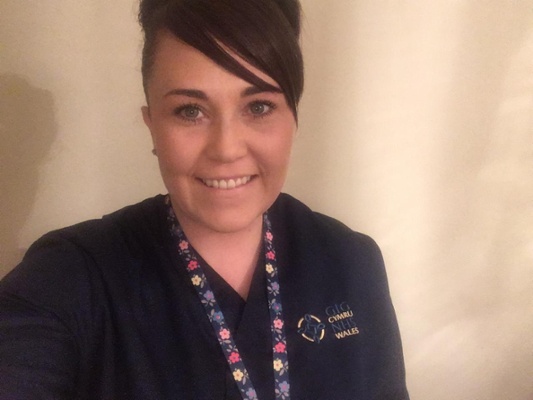 Corinna McNeil (Specialist Nurse for Organ Donation)
What is your role, and how did you become involved with the Organ Donation Team?
I am a Specialist Nurse for Organ Donation (lovingly known as a SNOD) and I am part of the South Wales Organ Donation Team, based at Cwm Taf Morgannwg University Health Board
I have been in my role for just over 2 and a half years, having worked in the emergency unit in UHW, Cardiff for more than 10 years prior to this.
What does your role involve?
I work across all three District General Hospital sites of the Health Board within the Intensive Care Units and all three emergency departments as a SNOD supporting patients and families. When level 3 intubated patients are referred to us (when a decision is taken to withdraw Life Sustaining Treatment) we will look on the Organ Donation Register to see if a decision by the patient has been registered whether they wish to donate their organs.
How do you support families of patients?
“We talk to the family of the patient to establish the last known decision they are aware of with regards to organ donation and if there is a registration found on the Organ Donation Register, we ask the next of kin to support the decision made by the patient. Following that the Team and I will support the family through the process. If the family wishes to OPT-OUT, we will support the family with their wishes.
Often, the family have lots of questions and we are there to answer them. When we have proceeding donors, it is lovely to hear those donated organs have been transplanted and the recipient is doing well.
I look after families who, in their darkest time of grief, support a loved one's decision for organ donation. Then we hear that a child has had a new heart or lungs, or someone has received the gift of sight through cornea donation - It really does make a real difference.
What would you say to someone who is thinking about organ donation?
My main message to everyone is to register your decision on the Organ Donation Register and talk to your family and leave them certain of your decision. Your family will not know how you feel about organ donation unless you tell them, so please talk about it.
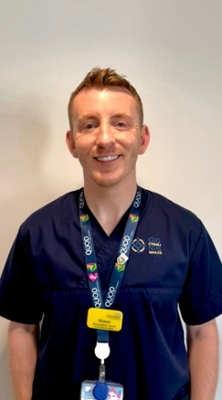 Shaun Miller-Jones (Specialist Nurse for Organ Donation)
What is your role, and how did you become involved with the organ donation team?
At 26 I decided to retrain and returned to college to complete an access to nursing course in Newport. From there I studied adult Nursing at Cardiff university, graduating in 2015 with a job as a critical care nurse. I’ve since returned to university to study an MSc in Advanced Practice, graduating from the University of South Wales in 2020. I have been a Specialist Nurse for Organ Donation (SNOD) for just under 4 years, recently transferring to Cwm Taf Morgannwg from the University of Bristol and Weston NHS Trust.
What does your role involve?
Consideration for organ donation is a standardised practice within the ICU. People that are likely facing end of life care decisions are routinely referred to the organ donation team to assess their suitability and ascertain any known decisions made via the organ donation register.
Death and dying is unfortunately a frequent occurrence within the ICU, primarily due to the complexities of the patient group we see. Organ donation introduced the concept of something positive being achieved from what is otherwise a very sad and difficult time for families and often the nursing team. It is an area of nursing that I have found to be really inspiring. There are many layers to this role, and no two days are ever the same. One day you could be in theatre coordinating a retrieval, the next delivering education to 20/30+ members of the multidisciplinary team.
Our role is to offer, where appropriate, organ donation as an end of life care option. That may include educating colleagues and the public around organ donation, supporting and offering guidance to medical colleagues around organ optimisation or patient stabilisation, undertaking audit and research, participating in a 24/7 on-call rota to cover donation activity throughout Wales and the South-West of England (and sometimes even further afield) where we coordinate the referral and organ retrieval process and oversee the running of organ retrieval in theatre.
What are the most rewarding aspects of the job?
All of it. We get to work alongside and learn from some incredible nursing and medical colleagues. We meet and support some incredible families at what is often at the most difficult times in their lives. We have the opportunity of travelling around the country, learning best practices and ways of working and then bringing that back to our own hospitals so we are able to offer the best services for the hospitals and communities that we serve. We are also sometimes in the privileged position of meeting organ recipients and getting to hear first-hand the difference our roles make.
What would you say to anyone thinking about organ donation/signing up to the organ donation register?
Organ donation is incredibly rare. In fact, less than 1% of the population will ever find themselves in a position to be an organ donor. Nobody thinks that organ donation will ever affect them, and a lot of people think ‘Why me?’
In my experience, the question people should actually be asking is ‘Why not me? Any one of us or our families could find themselves in a relatives’ room of an intensive care with a consultant breaking bad news and discussing their intent to move towards end of life care. Families often struggle to make decisions based on what they ‘think’ someone would want and are often conflicted.
By registering a decision on the organ donation register, you simple save your family the burden of having to make a decision on your behalf. If you take two minutes out of your day to register a decision, your family will absolutely know what your wishes are should they ever find themselves in that position. The other important thing to mention is the need to discuss your decision with your friends and family and make them aware of what you would want.
25/09/2025